


Peter Obi’s Exit from ADC: A Sign That Party Politics in Nigeria Is Still Unstable
- Judith Nnakee

- May 4
- 4 min read
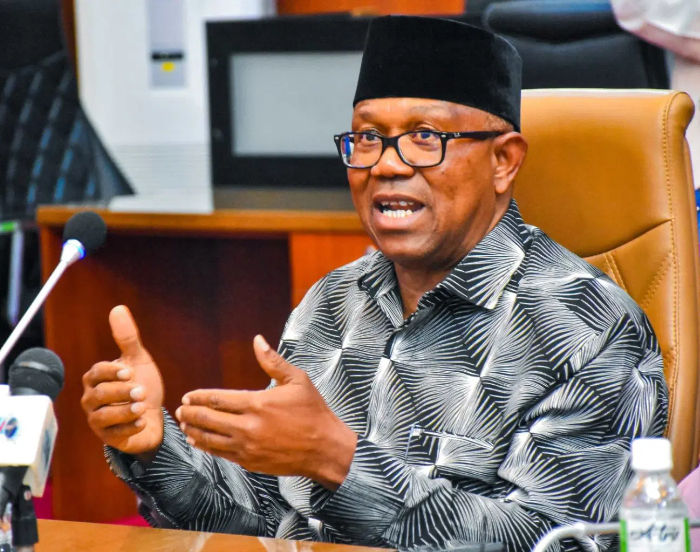
When Peter Obi announced that he was leaving the African Democratic Congress (ADC), the reasons being, internal crisis, division and endless court cases, did not come as a surprise.
If anything, it reinforces what many already know; political parties in Nigeria still struggle with internal stability.
Mr. Obi made it clear that his decision was not based on personal issues with party leaders like David Mark or Atiku Abubakar. Instead, he pointed to conflict within the party structure itself.
This is not the first time Obi has left a party under similar circumstances. His exit from the Labour Party also involved internal disputes. Is this an ADC problem or a wider issue in Nigerian politics?
Across different parties, the same patterns keep appearing, leadership struggles, court cases, factional divisions. These are not isolated cases anymore; they are becoming part of how parties operate.
Internal Crisis Has Real Political Consequences
When a party is dealing with internal conflict, it loses focus. Instead of building strong opposition or preparing for elections, energy is spent on settling disputes.
For someone like Obi, who still has a strong support base from the 2023 elections, being in a divided party limits his ability to organize politically. It also weakens the party’s credibility. Voters are less likely to trust a party that cannot manage its own internal affairs.
The Problem of Personality Politics
Another issue this situation highlights is how much Nigerian politics still revolves around individuals rather than institutions.
When strong figures come together without clear structures or agreed boundaries, conflict is almost inevitable. Everyone has influence, but there is often no stable system to manage that influence.
That is why alliances that look strong on paper, especially those involving figures like Rabiu Kwankwaso, can quickly become unstable in practice.
There has been ongoing talk about opposition figures coming together to form a stronger front. A united opposition has a better chance in national elections.
Different ambitions, regional interests, and leadership expectations often clash. Without a clear agreement on power-sharing, even well-intended alliances can break down quickly.
Obi’s exit may be another example of how fragile these coalitions can be.
The Role of Court Cases in Party Politics
Obi’s mention of “endless court cases” is is central to the problem. Legal battles have become a regular feature in Nigerian political parties. Leadership disputes often end up in court and these cases can drag on for months or even years.
During that time, the party remains distracted and divided. It also creates uncertainty. Members and supporters are often unsure which faction is legitimate, which weakens the party’s overall structure.
Perception vs Political Reality
In his statement, Obi raised questions about how integrity and prudence are perceived in Nigeria.
Why is careful management of resources sometimes seen as stinginess?
Why is following due process interpreted as weakness?
These questions reflect a real tension in Nigerian politics. There is a gap between what leaders say they stand for and what the political environment actually rewards. Strong rhetoric, visible action and political toughness sometimes gain more attention than quiet discipline or long-term planning.
One of Obi’s biggest strengths is his support base, especially among young voters and urban populations. But support alone is not enough in Nigerian politics.
Without a stable party structure, it becomes difficult to:
• mobilize voters effectively
• build grassroots networks
• protect votes during elections
This is where the challenge lies. Obi may still have public goodwill, but translating that into electoral success requires organization.
Is There a Trust Problem Within Parties?
Another angle to consider is trust. Internal division is often a sign that party members do not fully trust one another, whether it is about leadership decisions, candidate selection, or long-term plans.
When suspicion becomes part of party culture, even small disagreements can escalate into major conflicts. Obi’s reference to “suspicion and division” suggests that this may have been a factor within the ADC as well.
Looking ahead, Obi’s exit raises practical political questions.
• Will he align with another party?
• Will there be a new coalition attempt?
• Or will this lead to further fragmentation within the opposition?
Each of these possibilities has implications for future elections.
A divided opposition often benefits the ruling party, because votes that could have been consolidated are instead spread across multiple platforms.
Obi’s Position Going Forward
In his statement, Obi emphasized that he is not desperate for political office. That message is important, but it also raises questions about strategy. In Nigerian politics, influence is closely tied to structure. Without a platform, it becomes harder to stay politically relevant over time.
At the end of the day, Nigeria is not lacking in political figures, ideas, or even public engagement. What it continues to struggle with is building stable, functional political structures.
Obi’s departure from the African Democratic Congress is an example of how internal instability continues to shape the country’s political landscape. Until that changes, similar stories will keep repeating, different party, same outcome.


Comments