


Ogbunike Cave: A Sacred Underground Landscape of Culture, Nature, and Memory

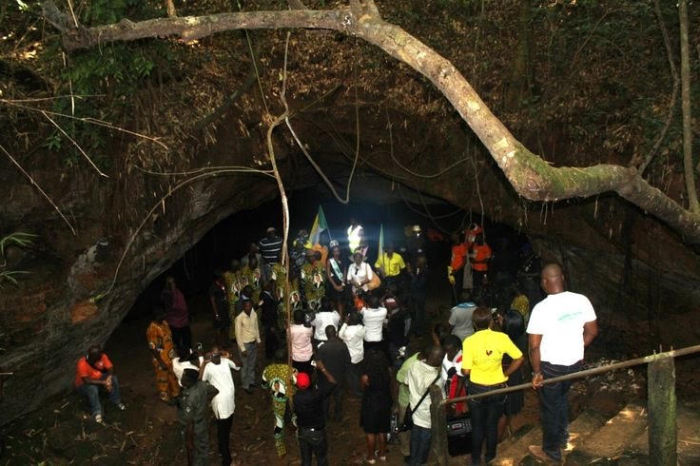
There are places in Nigeria that feel like history. Then there are places that feel like something deeper than history itself. Ogbunike Cave in Anambra State belongs to the second category. It is not simply a tourist site or a geological formation. It is a place that carries silence, memory, tradition, and a sense of meaning that cannot be separated from the people who have lived around it for generations.
For someone approaching it for the first time, Ogbunike Cave may appear like a natural curiosity carved into stone by water and time. But for the communities that surround it, it is much more than that. It is a space that exists between the physical and the spiritual, between what can be seen and what is believed, between nature and culture.
To understand Ogbunike Cave properly, one must slow down and move beyond the idea of it being just a “place to visit.” It is a place that has lived through generations of interpretation, respect, restriction, and cultural meaning.
The Hidden Architecture of Nature
Ogbunike Cave is formed through natural geological processes that took place over thousands of years. Water moving through rock gradually shaped a system of tunnels, chambers, and underground passages. What exists today is not a single hollow space, but a connected network that stretches beneath the earth like a hidden world.
Inside the cave, the environment changes immediately from the outside world. Light becomes limited, sound becomes softer and more echoing, and the temperature drops noticeably. The ground is uneven in some places, and water flows quietly through parts of the structure, creating a rhythm that feels constant and unbroken.
As people move deeper inside, the feeling of separation from the outside world becomes stronger. It is not just darkness or silence that defines the space, but a sense of stepping into something that existed long before modern settlements, roads, or cities were ever built.
This physical environment alone would make Ogbunike Cave remarkable. But what gives it its true significance is not only what nature created, but what people have added to it through meaning.
The Cave as a Cultural and Spiritual Landscape
For generations, the communities around Ogbunike have regarded the cave as a sacred place. It is not treated as a neutral natural site. Instead, it is understood as a space connected to ancestral presence, tradition, and spiritual identity.
This understanding did not come from written texts or modern documentation. It was passed down through oral tradition, cultural practice, and lived experience. Stories about the cave describe it as a place that must be approached with respect, where behavior is guided by cultural rules rather than casual curiosity.
In earlier times, access to the cave was not unrestricted. Certain days were considered appropriate for visits, while others were reserved for traditional observance. These practices were not arbitrary restrictions. They were part of a broader cultural system that defined how humans should interact with sacred spaces. Because of this system, the cave was never seen as simply a resource or a landmark. It was seen as a living part of the community’s identity.
The Role of Tradition in Preserving the Cave
One of the most important aspects of Ogbunike Cave is the way it has been preserved through tradition rather than formal conservation systems. Long before modern environmental protection policies existed, the cave was already being protected by cultural rules and community enforcement.
This protection was not enforced through written law but through respect, belief, and social responsibility. People understood that the cave required careful treatment, and this understanding ensured that it was not damaged or overused.
In many ways, this form of preservation is one of the reasons the cave still exists in its relatively intact form today. It demonstrates that conservation does not always require formal institutions. Sometimes, cultural belief systems can serve as equally powerful forms of protection.
Custodianship and Community Responsibility
The care of Ogbunike Cave has historically been guided by community custodianship. This means that responsibility for the site does not belong to a single authority but is shared through traditional structures within the surrounding community.
Custodianship includes regulating access, maintaining cultural practices, and ensuring that visitors understand the significance of the site. It also involves preserving the integrity of the cave by discouraging actions that could damage its structure or disrupt its cultural meaning.
What is important here is that the cave is not treated as an unowned natural feature. It is understood as a space that requires responsibility, respect, and continuity of tradition. This system has allowed the cave to remain culturally relevant even as the world around it has changed significantly.
Encounter With Modern Recognition
As time has passed, Ogbunike Cave has gained recognition beyond its immediate environment. It is now known not only within local communities but also at regional and national levels as an important cultural and natural heritage site.
This recognition has brought new attention to the cave, including tourism interest and heritage preservation efforts. Visitors come to experience its natural beauty and cultural depth, and researchers study its geological and historical significance.
However, even with this modern attention, the cave has not lost its original identity. Traditional custodianship still plays a role in how the site is accessed and understood. This creates a layered system where modern recognition and traditional authority exist side by side. Rather than replacing one another, they interact in a way that reflects the complexity of heritage management in Nigeria.
The Experience of the Cave as a Visitor
For those who visit Ogbunike Cave today, the experience is often described as both physical and emotional. The journey into the cave is not simply about movement through space but about transition into a different environment entirely.
The silence inside is not empty but full, as if it carries the presence of time itself.
The darkness is not only absence of light but a reminder of depth and distance. The sound of water adds a constant rhythm that grounds the experience in nature.
Visitors often leave with a sense that they have encountered something that cannot be fully captured in photographs or descriptions. This is part of what makes the cave so memorable. It resists being reduced to a simple attraction.
Ogbunike Cave remains important because it represents continuity. It connects present-day Nigeria to older systems of belief, environmental awareness, and cultural identity. It shows that natural spaces can become meaningful through human interpretation, and that meaning itself can play a role in preservation.
In a world where many natural and cultural sites are threatened by neglect or overuse, Ogbunike Cave stands as an example of how respect, tradition, and recognition can work together to sustain a place over time. It also challenges modern assumptions about ownership and control. The cave is not simply preserved because it belongs to someone in a legal sense. It is preserved because it is valued in a cultural sense.


Comments