


How to Deal With Comparison Without Losing Yourself

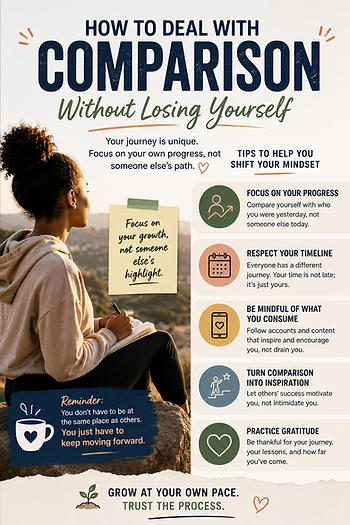
Why We Compare Ourselves to Others
Comparison is a natural human tendency.
We often look at other people to understand where we stand. We may compare our achievements, appearance, education, career, relationships, finances, or personal progress with those around us.
The problem begins when comparison becomes the main way we measure our value.
Social media can make this even more difficult. We may see someone's new job, business success, vacation, graduation, relationship, or exciting announcement and immediately compare it with our own life.
What we often forget is that we are seeing a moment from their life, not the entire story.
The Danger of Comparing Your Beginning to Someone's Middle
One of the biggest mistakes comparison creates is making us judge our progress against someone else's results.
You may be looking at someone who has spent years developing a skill while you are only beginning. You may see someone's successful business without seeing the years of learning, mistakes, setbacks, and uncertainty that came before it.
Their progress does not mean yours is insignificant.
Different people start from different places, have different resources, and face different circumstances. Expecting everyone to reach the same destination at the same time is unrealistic.
Dealing With Comparison Starts With Your Own Progress
Instead of constantly asking, "Am I doing as well as them?" try asking:
"Am I making progress compared with where I was before?"
This question shifts your attention from competition to growth.
Maybe you are more confident than you were a year ago. Maybe you have learned something new, become more responsible, improved a relationship, started working toward a goal, or simply become more aware of yourself.
These things matter.
Progress does not always come in dramatic forms. Sometimes, growth is simply becoming a little better, wiser, or more intentional than you were before.
Stop Using Someone Else's Timeline as Your Deadline
Everyone has a different timeline.
Some people graduate early. Others take longer. Some discover their career path quickly, while others explore several options before finding what works for them.
Some people achieve major milestones in their twenties. Others reach them much later.
There is no universal schedule for life.
When you constantly compare your timeline with someone else's, you may begin to feel like you are late when you are actually still moving forward.
Your journey does not become less valuable because someone else reached a milestone before you.
Be Careful About What You Consume
Sometimes, dealing with comparison requires changing what you allow into your mental space.
If certain social media accounts consistently leave you feeling discouraged or inadequate, it may be worth taking a step back from them.
This does not mean that the other person is doing anything wrong.
It simply means you are becoming aware of how certain content affects you.
Follow people who educate, inspire, encourage, or challenge you in healthy ways. Give yourself permission to take breaks from online spaces when you need them.
Your attention is valuable.
Turn Comparison Into Inspiration
Comparison does not always have to be negative.
When you see someone accomplishing something you admire, instead of thinking, "I will never be like them," ask:
"What can I learn from them?"
Someone else's success can become evidence that something is possible rather than proof that you are inadequate.
If someone has built a successful business, learn about their discipline.
If someone has developed an impressive skill, study how they practiced.
If someone has achieved an important goal, allow their story to motivate you while remembering that your path will be different.
Inspiration says, "I can learn from this."
Unhealthy comparison says, "I am not enough because of this."
Practice Gratitude for Your Own Journey
Gratitude can help redirect your attention toward what is already present in your life.
Take time to recognize what you have learned, the people who support you, the opportunities you have received, and the progress you have made.
This does not mean ignoring areas where you want to improve.
You can be grateful for where you are while still working toward where you want to be.
Growth and gratitude can exist together.
Remember That Your Worth Is Bigger Than Your Achievements
Your value as a person cannot be reduced to a list of accomplishments.
A person's job title, income, academic achievement, social media following, relationship status, or possessions do not tell the complete story of who they are.
When you understand this, comparison becomes less powerful.
You can admire someone else's achievements without using those achievements as evidence against yourself.
Dealing with comparison does not mean you will never notice what other people are doing. It means learning how to recognize comparison without allowing it to control how you see yourself.
Someone else's progress is not proof of your failure.
Someone else's success does not make your journey less meaningful.
Instead of constantly looking sideways, look backward sometimes and recognize how far you have come. Then look forward and decide where you want to go next.
Your journey deserves your attention too.
By Deborah O.D Igberi


Comments